Upholstery Care Guide
Read our Upholstery Care Guide for expert tips on cleaning, protecting and maintaining fabric and leather sofas and chairs to keep them looking their best.

Thank you for choosing to purchase your new furniture from Fishpools. This guide will help you care for your investment and prolong its life.
General care
Gently brush or vacuum your upholstery regularly. Accumulated dirt will increase the wear and dull the colour. Refrain from sitting on the arms or on the edges of your new furniture
Abrasions and snags
Avoid sharp objects like buckles which can cause snags. If they occur, don't pull them, just cut them off carefully with scissors. Don't allow animals on your furniture and be aware that heavy clothing such as denim can be very abrasive.
Dye transfer
This may occur from non colour fast clothing items and is particularly noticeable on lighter leather or fabrics. This is not the fault of the material.
Stains
Spots and spills should be dealt with as soon as they happen by dabbing with a clean absorbent cloth. If your upholstery is protected by our stain warranty, please refer to the separate guarantee and cleaning advice
Cleaning
Dry clean upholstery unless the label says that it can be washed. We recommend cleaning at least once a year by a specialist third-party.
Sunlight and heat
Avoid positioning sofas and chairs close to heat sources or in prolonged sunlight. Failure to do so may cause excessive colour fading or ageing to the fabric.
Cushions
Reversible cushions should be turned and rotated regularly, with seams squared up to give even wear. Feather and fibre filled cushions must be turned and plumped to prevent flattening. Some cushions, especially fixed fibre filled arm cushions, may have settled during transit. Regularly plump and dress your cushions into shape.
Recliners
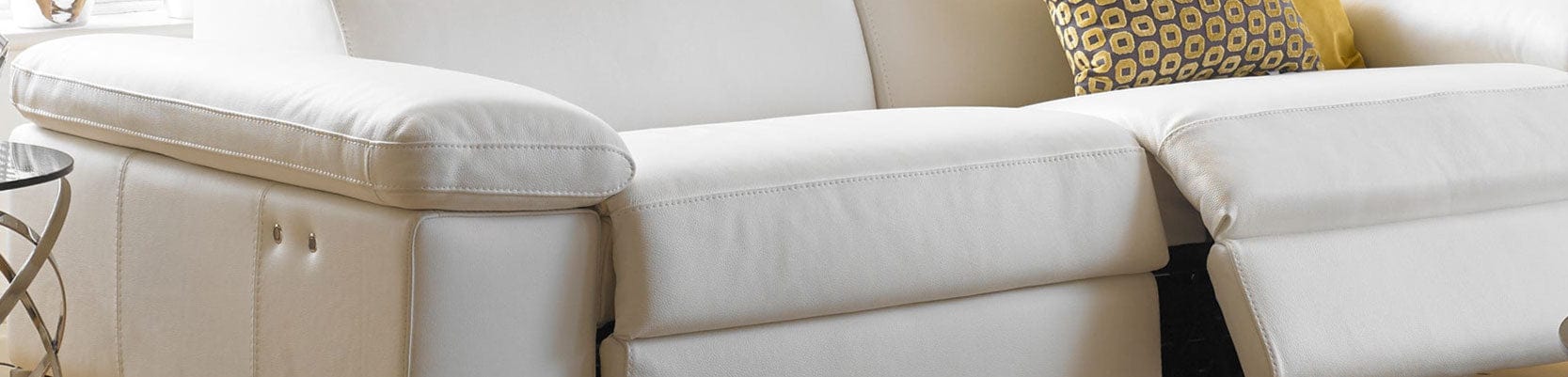
Open and close recliners with care and never force them. It is normal to have gaps between the actions to allow free movement and avoid abrasion.
Puckering and creasing
Some ranges may be manufactured using a 'relaxed design'. Puckering and creasing are a natural features of this style and can vary depending upon the chosen fabric.